
Neuropathy & Nerve Disorders
Expert care for peripheral nerve injury, nerve surgery and more
Leading-Edge Nerve Specialists in Boston
The Division of Neuromuscular Disorders at Beth Israel Deaconess Medical Center (BIDMC) provides world-class care to people with neuropathy and other nerve conditions. Our neuromuscular care team offers the latest in diagnostic, therapeutic and supportive options.
We use the latest advanced technology and specialty treatments for nerve disorders. Our team provides comprehensive, supportive care and education for you and your family throughout your care journey.
Conditions We Treat
Our neurologists provide care for the full range of nerve and neuromuscular disorders, including:
- Amyloidosis
- Acquired neuropathies including:
- Chronic inflammatory demyelinating polyradiculoneuropathy (CIDP)
- Guillain-Barré syndrome (acute inflammatory demyelinating polyneuropathy or AIDP)
- Brachial plexus injuries and disorders including:
- Brachial neuritis (Parsonage Turner syndrome)
- Compression of nerves:
- Median neuropathy (carpal tunnel syndrome)
- Radial neuropathy
- Ulnar neuropathy
- Other neuropathies
- Failed nerve procedures
- Inherited neuropathies including Charcot Marie Tooth disease
- Lewy body dementia
- Migraines
- Multiple system atrophy
- Nerve entrapments
- Nerve tumors
- Neurally mediated syncope
- Orthostatic hypotension
- Painful neuromas
- Parkinson’s disease with dysautonomia
- Postural tachycardia syndrome
- Small fiber neuropathy
- Pure autonomic failure
- Traumatic nerve injury
Our specialists in the Division of Autonomic and Peripheral Nerve Disorders are here to provide specialty care.
Your Care Journey
- Referral required: Patients must be referred by a physician.
- First visit: You’ll meet with a neurologist, undergo a personalized evaluation and begin your diagnostic and treatment plan.
- Ongoing support: We provide education, rehabilitation, and long-term follow-up care to support you and your family throughout your journey.
More About Neuropathy & Nerve Disorders
During your first visit, you will meet with our team for a physical exam. You’ll also answer questions about your symptoms and health history. Depending on the initial findings, your care team may suggest further testing. This may include:
- Electromyography (EMG)
- High-resolution peripheral nerve ultrasound
- MRI
- Nerve conduction study (NCS)
Autonomic Testing
Your care team may suggest autonomic testing to help diagnose your nerve disorder. During this, you’ll participate in a series of painless, non-invasive assessments. We’ll measure your heart rate and blood pressure in response to a variety of stimuli.
Biopsy
During a biopsy, a member of your care team removes a small tissue sample. We send the tissue to the laboratory for close analysis.
If your care team recommends you have a biopsy, your clinician will take samples from three separate spots on one of your legs. We use the results to determine the number of small nerve fibers in your skin.
The biopsy procedure involves these steps:
- An injection of local anesthetic to numb the area needing the biopsy
- A sharp device collects tiny biopsy samples from your skin, each about one-quarter the size of a pencil eraser so no need for stitches
- Outside of the leg (just above the ankle)
- Above the knee
- Just below the hip
After your procedure, we’ll provide you with care instructions for the biopsy sites. We’ll examine the nerve fibers from your biopsy samples under a microscope.
Nonsurgical Treatments
Your care team will create your individualized treatment plan based on the results of your diagnostic tests, your symptoms, your specific condition and other factors. Before recommending surgery, we typically try these conservative treatments first.
- Occupational therapy
- Physical therapy
- Psychotherapy
- Spinal cord stimulators
Surgical Treatments
If non-invasive treatments aren’t enough to manage your condition, your care team may suggest surgery. Our neurosurgeons collaborate with other specialty surgeons at BIDMC, including plastic and reconstructive surgeons and orthopedic surgeons.
Our neurosurgeons offer the full range of surgical options for neuropathy and nerve disorders:
- Free functional muscle transfer
- Nerve repair
- Nerve transfer
- Release or nerve reconstruction
- Tendon transfer
- Vascularized nerve grafting
As part of our surgical options, we routinely perform targeted muscle reinnervation (TMR) and regenerative peripheral nerve interface (RPNI). We use these to help manage neuroma-related pain. This includes phantom pain where an upper or lower extremity was amputated.
As part of the testing process, you’ll participate in a series of painless, non-invasive assessments to assist with diagnosis.
- We’ll measure your heart rate and blood pressure in response to stimuli such as deep breathing and active/passive standing.
- We’ll also measure your sweat response to deep breathing and mild electrical stimuli.
Pre-Test Instructions
- Avoid alcohol and over-the-counter medications (such as decongestants).
- Avoid cardiovascular medications for one-to-three days prior, as permitted by your primary care doctor.
- Avoid caffeine and stimulants for at least six hours before the study.
- Eat well about three hours before the study (but not within two hours), unless instructed otherwise by your doctor.
- Wear a short-sleeved, loose-fitting top.
- Bring your insurance information and a list of current medications (including dosages).
- Upon arrival, you’ll complete a short questionnaire about your symptoms and history.
If your clinician recommends a biopsy, a small skin sample will be taken to measure the number of small nerve fibers.
During the Procedure
- You’ll receive a local anesthetic to numb the area.
- A sharp device collects 3 mm biopsy samples (about ¼ of a pencil eraser).
- Stitches are not required.
Samples are taken from three sites on one leg:
- Just above the ankle
- Above the knee
- Just below the hip
The samples are then examined under a microscope. Afterward, you’ll receive simple care instructions for the biopsy sites.
Advancing Care, Research & Education

Department of Neurology
The Department of Neurology offers exceptional patient care, education opportunities and research programs.
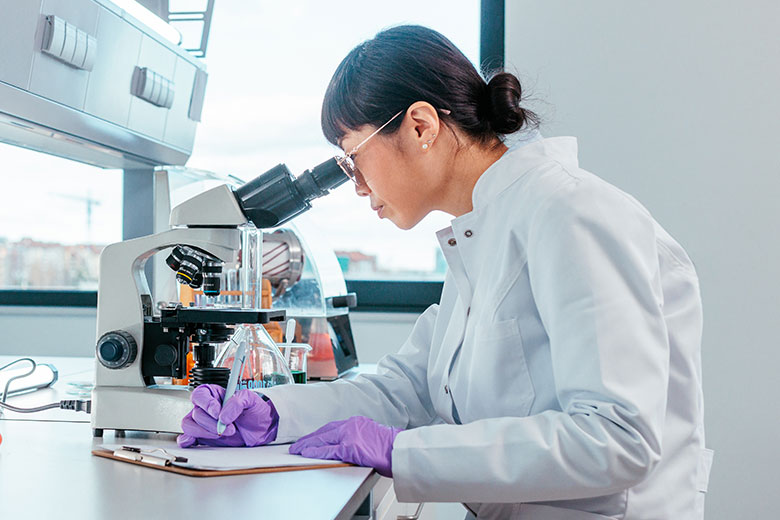
Neurology Research
Our top-tier research programs and laboratories work to advance the knowledge and treatment of neurological disorders.

Neurology Education
Our team offers comprehensive education and training programs for healthcare professionals, including fellowships and residencies.


