Breaking Through a Hidden Heart Blockage
How a High‑Risk Heart Procedure Became a Remarkable Success
Though he was groggy from sedation following a heart catheterization last July, Mike Sawyer clearly remembers the excitement in Dr. Robert Yeh’s voice as he leaned down to tell him, “We did it. We got through the blockage.” The Cath Lab staff erupted in applause, a moment that underscored both the technical achievement and the deep sense of shared relief in the room.
Just six weeks before, Dr. Yeh, BIDMC’s Section Chief of Interventional Cardiology, had discovered that the critically important LAD artery in Mike’s heart was a chronic total occlusion (CTO), meaning that it was 100 percent blocked. It was also located in a position that made it impossible to see the course of the vessel – rendering the usual approaches to opening heart blockages useless, or even worse, risky. His first attempt at nonsurgical PCI repair was unsuccessful, leaving Mike and his care team facing limited options.
“We had to figure out what to do for this extremely complicated case,” Dr. Yeh remembers. He thought of Dr. Akiko Maehara, an expert in imaging blood vessels from Japan, who had developed methods to visualize the origin of heart blockages using ultrasound guidance. Working together with Dr. Maehara, Dr. Yeh gained a new view of Mike’s coronary artery and access to reach the dangerous blockage and place a stent to restore blood flow to the heart. The procedure required careful coordination, precision, and real-time decision-making from the entire Cath Lab team.
Advances in interventional cardiology have resulted in new, minimally invasive treatments to open complex coronary blockages, including CTOs. BIDMC staff are recognized internationally for their expertise in opening CTOs safely and effectively. The team often uses a combination of approaches during procedures to achieve the best results.
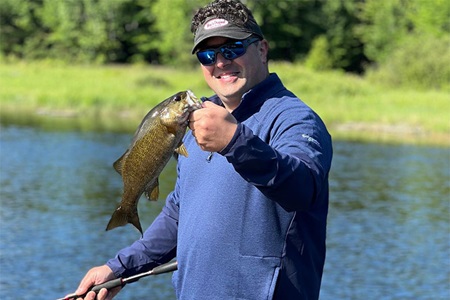
“It’s difficult to think about what could have been if this problem hadn’t been discovered or if I had had to go through open heart surgery,” says Mike. Instead, he and his wife went home the night of the procedure and were able to take their much-loved annual vacation to Moosehead Lake just two weeks later. “Mike’s experience is the very type of reward that drives our Interventional Cardiology team to keep getting better,” says Dr. Yeh. “I’m just ecstatic that things worked out the way they did.”
Learn more about care for Chronic Total Occlusion Therapy at BIDMC.
Share This Story



Heart Care
Our cardiovascular specialists provide effective treatment for heart conditions, including chest pain and heart failure.